Author: GaryH

  • RTK Rover Buying Guide for UK Survey Work

    RTK Rover Buying Guide for UK Survey Work

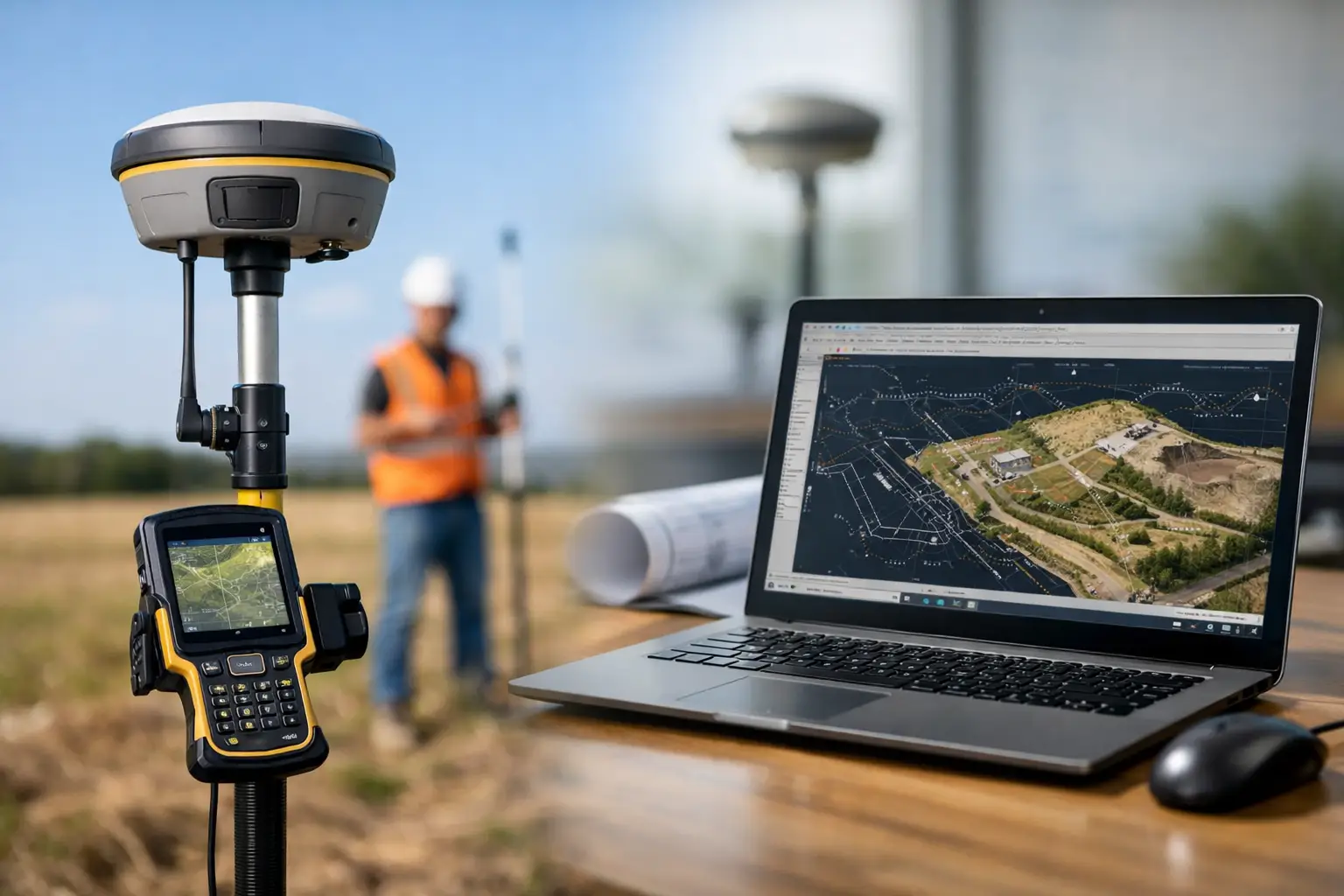
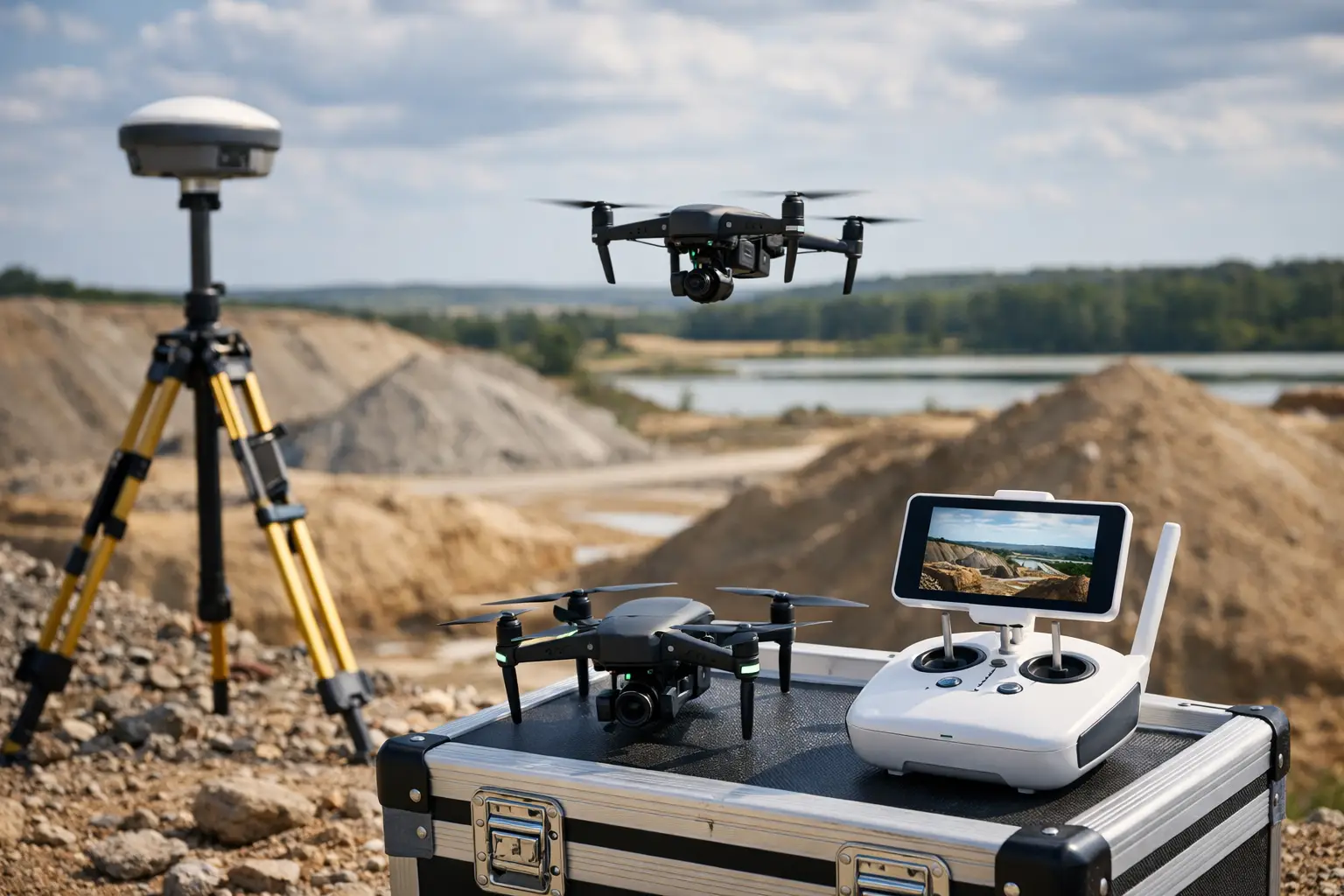
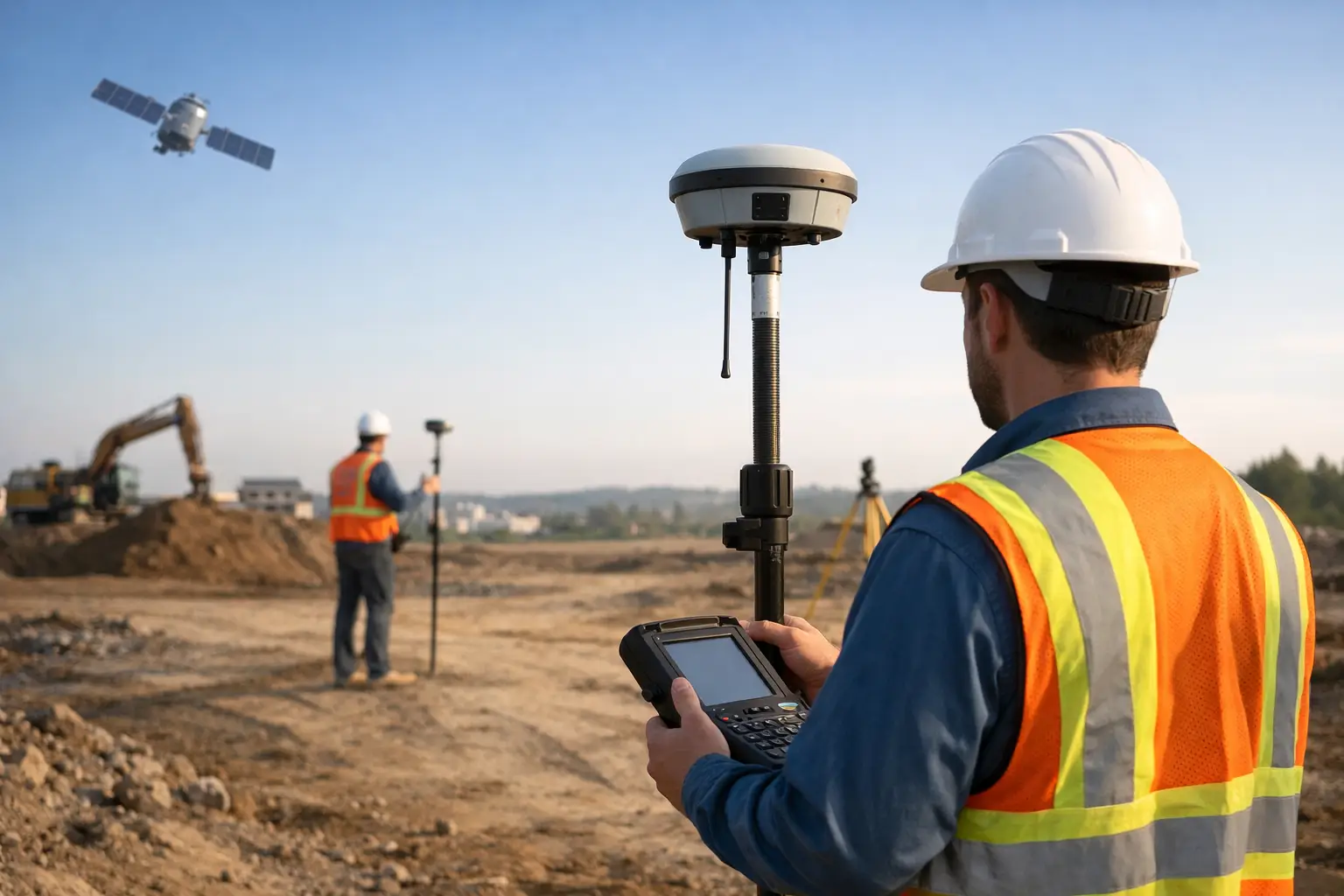
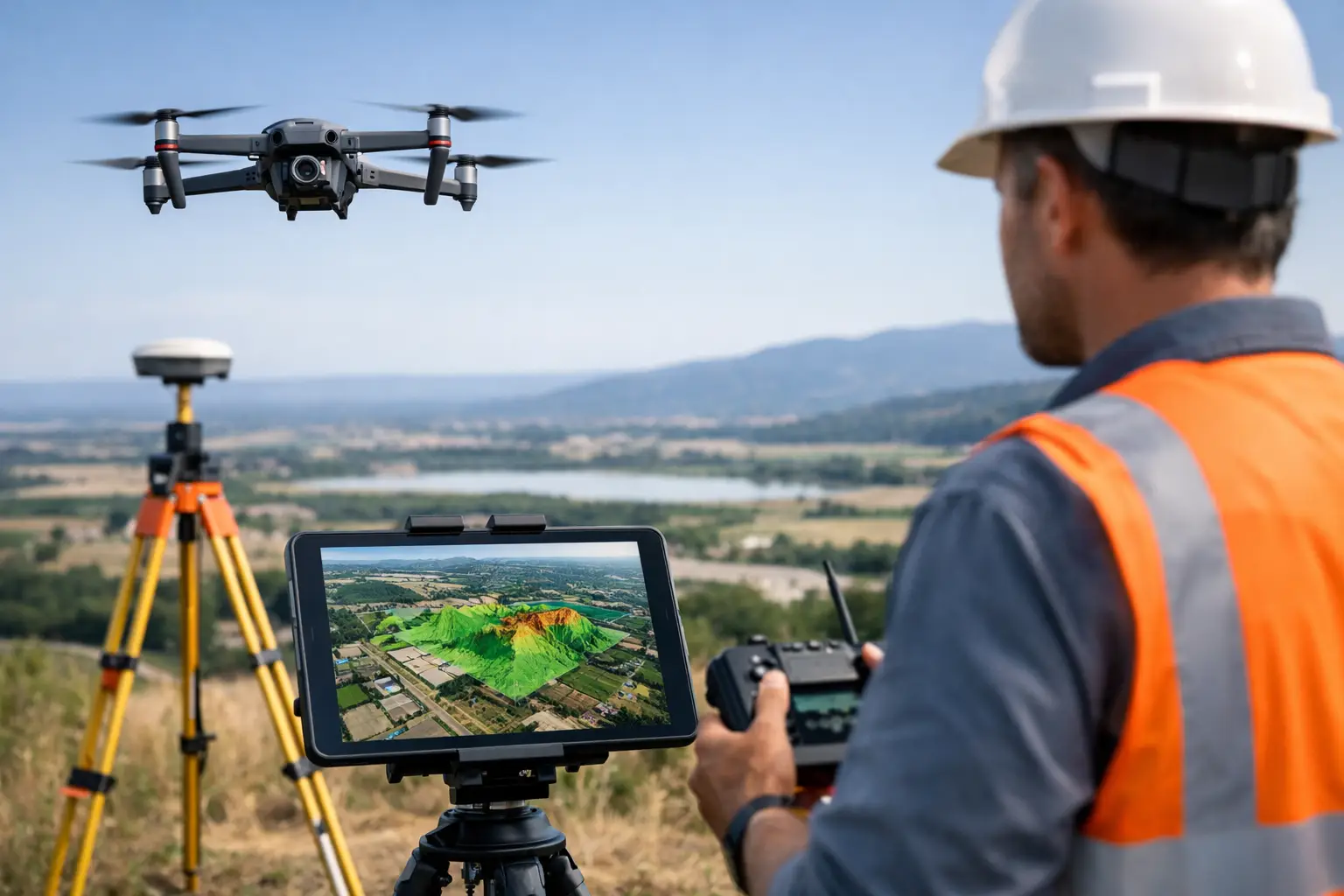
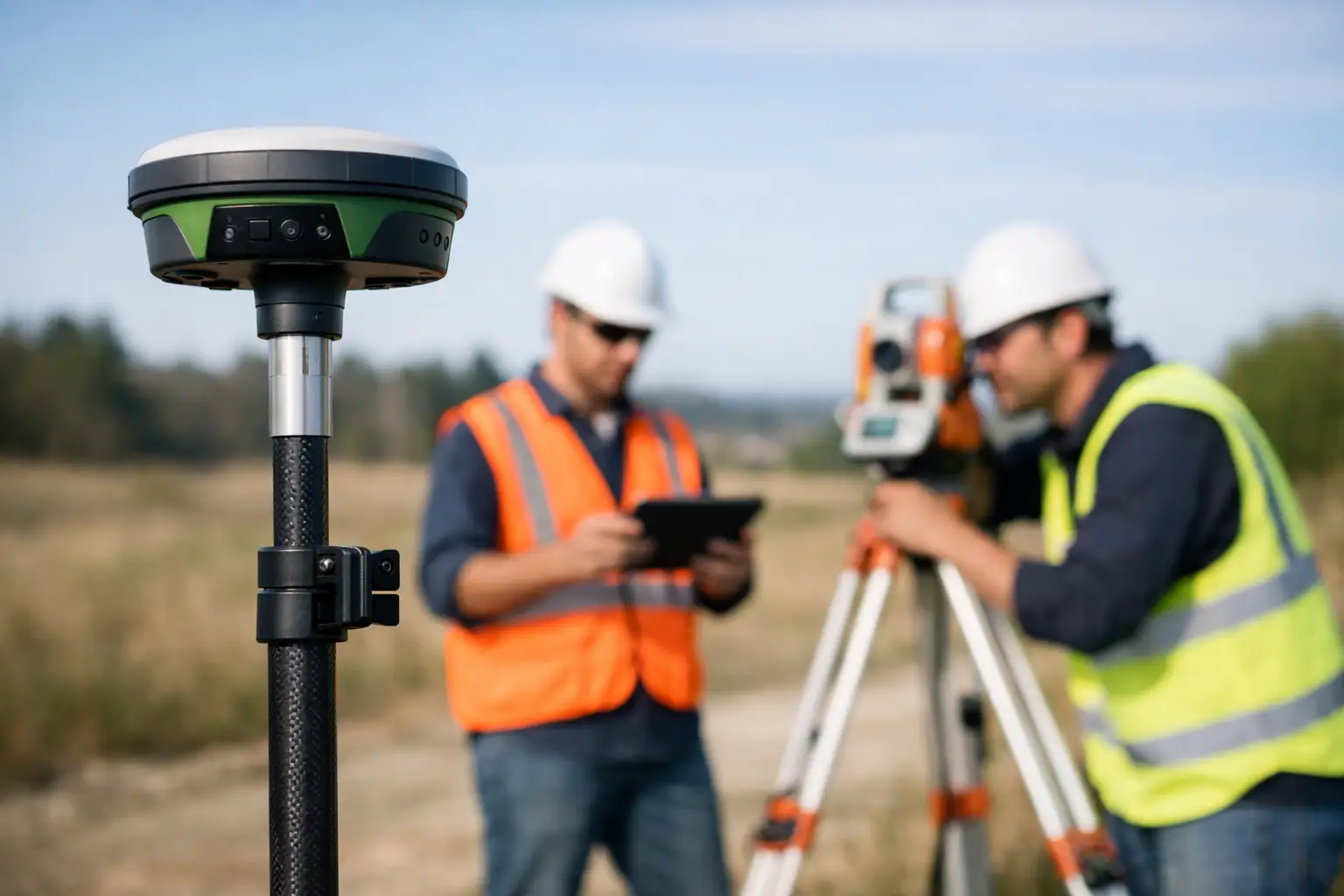
    If you are comparing systems right now, an rtk rover buying guide should do more than repeat headline specs. The real question is whether a rover will hold accuracy on your sites, fit your workflow, and keep productive crews moving without adding avoidable support issues. For UK survey, construction and asset teams, the right choice is usually the one that balances correction reliability, field usability and downstream data compatibility.

    What this RTK rover buying guide should help you decide

    A professional RTK rover is not simply a box that delivers centimetre-level coordinates. It is part of an operational chain that includes GNSS tracking, correction delivery, field software, data export, training and after-sales support. If one part of that chain is weak, the whole investment underperforms.

    That is why buying on price alone often creates expensive friction later. A lower-cost rover may look competitive on a specification sheet, but if it struggles under tree cover, lacks a stable correction workflow, or produces awkward exports for your office team, the savings disappear quickly. Commercial buyers should assess the full working system, not just the hardware.

    Start with the job, not the brochure

    Before comparing models, define the type of work the rover needs to handle most often. Setting out on open construction sites is different from topographic survey near buildings, utilities work in constrained environments, or mapping linear infrastructure where crews need to cover ground quickly.

    If your sites are generally open with good mobile coverage, many modern RTK rovers will perform well enough. If your teams work near woodland, embankments, dense urban features or intermittent signal conditions, the tolerance for weak performance drops sharply. In those cases, receiver quality, multi-constellation tracking and correction resilience matter far more than headline marketing claims.

    It also helps to be honest about who will use the equipment. A surveyor with strong GNSS experience can work around limitations that may slow down a broader site team. If the rover will be used by engineers, setting-out operatives or utility crews, simple field workflows and reliable fixed solutions are often more valuable than advanced functions that rarely leave the menu.

    Accuracy claims need context

    Every rover promises high accuracy, but professional buyers should look closely at how that accuracy is achieved and under what conditions. A quoted horizontal and vertical accuracy figure is only part of the picture. The more useful question is how quickly the rover reaches a fixed solution and how consistently it maintains it during normal field use.

    This is where receiver engine quality and satellite tracking become significant. Strong support for GPS, GLONASS, Galileo and BeiDou gives the rover more observations to work with, which can improve reliability in more difficult environments. Tilt compensation can also be valuable, particularly for fast topographic work or points near walls, fences and inaccessible features. Even so, tilt should support good surveying practice, not replace it. Buyers should confirm how tilt affects achievable accuracy and whether it suits their required tolerances.

    For many professional applications, repeatability matters as much as absolute claimed precision. A rover that delivers stable, repeatable coordinates through a full working day is usually more commercially useful than one that looks exceptional in ideal test conditions but becomes inconsistent on real sites.

    Correction services will shape day-to-day performance

    An RTK rover is only as effective as the correction source behind it. In the UK, that often means working through NTRIP over mobile data, either via a national network, a regional service or a private correction setup. This part of the buying decision is frequently underestimated.

    You need to consider signal availability across your operating area, not just at head office or on one familiar site. Rural jobs, transport corridors and remote utility routes may have weaker mobile data coverage, which can interrupt correction delivery. If your crews regularly work in those environments, ask how the rover behaves during dropouts, how quickly it re-establishes a fix, and whether alternative workflows are practical.

    There is also a commercial decision here. A lower upfront hardware cost can be offset by ongoing subscription fees if the correction model is not right for your business. For some organisations, a bundled support and corrections approach is easier to manage. For others, flexibility across multiple services is more valuable.

    Field software often decides whether crews actually like using it

    A capable receiver can still become a poor purchase if the field software slows work down. In practice, your team will spend more time interacting with the controller and data collection app than thinking about the GNSS board inside the pole.

    Look closely at how the system handles common tasks such as coding points, setting out lines, checking tolerances, managing coordinate systems and exporting results. The best workflows are clear, fast and difficult to get wrong under site pressure. That matters in construction and engineering environments where time on site is expensive and mistakes can ripple into rework.

    Compatibility with your office environment is just as important. If you need outputs for CAD, GIS, machine control or asset management systems, confirm the format and process before purchase. A rover that captures good data but creates delays in handover is not efficient. This is one reason many buyers prefer to work with a supplier that understands the complete workflow rather than just dispatching hardware.

    Build quality and ergonomics matter more than they seem

    Professional rovers are field tools, so durability should not be treated as a minor detail. Weather resistance, battery performance, pole mounting security and controller robustness all affect productivity. A unit that needs frequent charging, loses connection between devices, or feels awkward over a full shift can become frustrating very quickly.

    Weight and handling also matter. If crews are carrying the system all day across mixed terrain, small differences in ergonomics can improve fatigue and speed. That is particularly relevant for topographic surveys, utilities tracing and long linear jobs where productivity is driven by steady point capture rather than occasional measurements.

    For organisations buying multiple units, standardisation can be a hidden advantage. Consistent hardware, batteries, accessories and setup processes reduce training time and simplify support.

    The real cost is ownership, not purchase price

    A practical rtk rover buying guide has to address total cost of ownership. The purchase price is only one part of the investment. You should also account for correction subscriptions, field software licences, training, support, servicing, replacement accessories and the internal cost of downtime.

    This is where the cheapest option can become the most expensive. If a failed controller stops a crew for a day, or if poor support leaves your team troubleshooting on site, the cost is immediate. For contractors and service providers, that impact is not theoretical. It affects programme delivery, client confidence and margin.

    Support quality is therefore a buying criterion, not an afterthought. Ask who provides setup assistance, firmware updates, troubleshooting and user training. Confirm whether support is UK-based and whether the supplier understands real survey and construction workflows. Buyers who need dependable outcomes usually benefit from working with a specialist partner rather than a general reseller.

    Questions worth asking before you buy

    The strongest buying decisions usually come from a live discussion or demonstration, not a static specification sheet. Ask how the rover performs near buildings and under partial canopy. Ask what correction options are recommended for your operating area. Ask how data moves from field to office. Ask what happens if a unit fails mid-project.

    It is also sensible to request a demonstration built around your use case. A construction firm may need efficient setting out with clear tolerance checks. A utilities team may prioritise fast topo capture and reliable fixes in constrained streets. A survey practice may care more about coordinate system control, repeatability and export flexibility. The right system depends on the work.

    For organisations looking at a wider geospatial workflow, there can be value in choosing a supplier that also understands LiDAR, drones, processing and outsourced field support. LiDAR Tech UK operates in that wider environment, which can be useful where RTK positioning needs to integrate with broader spatial data capture and delivery.

    Buy for reliability on your sites

    There is no single best rover for every buyer. Some organisations need a straightforward, cost-effective setup for regular site work in open conditions. Others need a more capable system that holds performance in difficult environments and integrates cleanly with demanding survey workflows.

    The better question is not which rover has the longest feature list. It is which one will give your team reliable fixed solutions, efficient field operation and dependable support over the next several years. If a system can do that, it is far more likely to deliver a sound return than one chosen purely on headline price or marketing language.

    A good purchase is the one that still feels right after a wet week on site, a tight programme, and a client who expects answers first time.

  • Choosing a GNSS Receiver for Surveyors

    Choosing a GNSS Receiver for Surveyors

    A missed fix on a live site does more than slow the job down. It can delay setting out, force return visits and create doubt in the data. That is why choosing the right GNSS receiver for surveyors is not simply a hardware decision. It is an operational decision that affects productivity, confidence and the quality of every downstream deliverable.

    For professional users, the real question is not which unit has the longest specification sheet. It is which system gives dependable results in the environments you actually work in, with workflows your team can adopt quickly, and support that keeps projects moving when conditions are less than ideal.

    What surveyors should expect from a GNSS receiver

    A professional GNSS receiver should provide more than a position. It should deliver repeatable, verifiable accuracy under practical site conditions, whether that means open rural land, urban streets with partial sky obstruction or active construction environments with tight deadlines.

    At minimum, surveyors will expect multi-constellation tracking, stable RTK performance, fast initialisation and reliable communications for receiving corrections. Beyond that, the better systems reduce friction in daily use. That includes intuitive field software, efficient stakeout tools, straightforward coordinate system management and dependable battery life across a full working day.

    This is where specification and usability need to be considered together. A receiver may look strong on paper, but if the controller software is awkward, the radio link is inconsistent or the setup process slows down less experienced operators, the claimed performance becomes less valuable in practice.

    How to assess a GNSS receiver for surveyors

    The right buying criteria depend on your workload. A surveying practice focused on topographic surveys will not necessarily prioritise the same features as a civil engineering contractor carrying out setting out and machine control support. Still, a few core areas matter almost every time.

    Accuracy and fix reliability

    Manufacturers often quote horizontal and vertical accuracy under ideal RTK conditions. Those figures are useful, but they are not the whole story. What matters just as much is how consistently the receiver holds a fixed solution when visibility is compromised by buildings, trees or site structures.

    For many buyers, the practical distinction is between occasional performance and dependable performance. A receiver that achieves excellent results on an open test field but struggles around partial obstructions may not be the best commercial choice if your work regularly involves infrastructure corridors, utility assets or built-up sites.

    Correction services and connectivity

    Most professional operations rely on RTK corrections through NTRIP, local base stations or a wider correction network. The GNSS receiver needs to fit that correction method without introducing complexity for the field team.

    If your crews are working across different parts of the UK, mobile data reliability matters. Dual SIM capability, strong modem performance and straightforward network configuration can make a noticeable difference. If your workflow depends on local base and rover setups, then radio performance and ease of configuration become more important.

    Field software and data flow

    A receiver is only one part of the system. Surveyors should look closely at how observations are collected, coded, checked and exported. Poor software can create bottlenecks long after the fieldwork is complete.

    Good field software should support common survey tasks efficiently, including topo survey, stakeout, control checks and point coding. It should also integrate cleanly with your office environment so that CAD-ready or processing-ready outputs do not require unnecessary manual intervention.

    Build quality and field practicality

    Survey equipment is used in rain, dust, mud and traffic management environments. A compact and well-balanced rover may reduce operator fatigue on longer days, while ingress protection, pole stability and battery endurance all contribute to actual site performance.

    Surveyors should also consider startup time, screen readability on the controller and how easy the system is to troubleshoot in the field. Small practical details often have a larger effect on productivity than headline specifications.

    Matching the receiver to the job

    The best GNSS receiver for surveyors depends heavily on application. There is no single correct model for every buyer, because different sectors place different demands on accuracy, speed and resilience.

    For topographic and measured surveys, consistency and clean data capture usually matter more than extreme complexity. Surveyors need reliable RTK, efficient coding and straightforward export into existing CAD or GIS workflows.

    For construction and setting out, the priority often shifts towards speed, confidence and repeatability. Crews need to move quickly between points, verify positions without delay and maintain accuracy in environments where partial obstructions are common.

    Utilities and infrastructure teams may place more emphasis on reliability in difficult signal conditions and on workflows that support asset capture over wide areas. Forestry and rural land users may value strong satellite tracking in mixed environments and long battery life for extended field sessions.

    This is why product selection works best when linked to the actual project mix rather than broad marketing claims. A receiver that is right for one business may be a poor fit for another with different site constraints and reporting requirements.

    Beyond the rover head – the full system matters

    Many purchasing decisions focus too narrowly on the GNSS unit itself. In practice, professional results depend on the full system: receiver, controller, software, corrections, accessories, training and support.

    If a business is adopting new equipment across multiple crews, implementation becomes especially important. Even capable surveyors can lose time if setup, coordinate systems or data handling are not standardised from the outset. The value of supplier support increases further when teams are under programme pressure and cannot afford avoidable downtime.

    This is one area where working with a specialist provider can make a measurable difference. The equipment matters, but so does pre-sales advice, onboarding, technical assistance and the ability to align the system with your existing geospatial workflows.

    Common trade-offs buyers should recognise

    There is usually a balance between cost, capability and operational simplicity. A lower entry price can look attractive, but if fix reliability is weaker or software productivity is poor, the total cost over time may be higher through rework, delays and lost field hours.

    Equally, the most feature-rich system is not automatically the best option. Some organisations do not need advanced functions that add cost and complexity without improving daily output. The right investment level depends on survey volume, required accuracy, operator skill and the commercial value of faster completion.

    Another common trade-off is between standalone hardware purchase and a more complete solution. Some buyers only want the unit. Others benefit more from a package that includes setup, training, correction services and ongoing support. For teams expanding capability or replacing older workflows, the second approach often reduces risk.

    Questions worth asking before you buy

    Before committing to any GNSS system, it is worth testing it against your real operating conditions. Ask how it performs near buildings, under tree cover or around plant and steelwork. Check how quickly a new operator can become productive. Review the software workflow from field capture through to office output. Confirm what support is available if there is an issue during a live project.

    It is also sensible to ask about firmware updates, service arrangements and how easily the receiver can fit alongside other technologies such as total stations, UAV mapping outputs or LiDAR datasets. For many organisations, the receiver is part of a wider spatial data ecosystem rather than a standalone tool.

    LiDAR Tech UK works with professional users who need that broader view, where GNSS performance is judged not only by satellite tracking but by how effectively it supports surveying, mapping and data capture at project level.

    Why the right choice pays back quickly

    A well-matched GNSS receiver improves more than point collection speed. It reduces revisits, strengthens confidence in setting out, shortens training time for new operators and helps maintain quality across multiple crews. Those gains have direct commercial value, especially where project margins depend on efficient field delivery.

    For businesses tendering for more demanding work, reliable GNSS capability also supports a stronger service offer. Accurate, repeatable positioning underpins faster surveys, cleaner outputs and better integration with photogrammetry, mobile mapping and LiDAR-led workflows.

    The strongest buying decisions are usually the least complicated. Choose the system that gives your team dependable accuracy, practical field efficiency and support you can rely on when deadlines are tight. If the receiver fits the work, the rest of the workflow becomes easier to trust.

  • 3D Modelling from LiDAR Data That Delivers

    3D Modelling from LiDAR Data That Delivers

    A missed detail in a plant room, a façade that is a few centimetres out, or an incomplete terrain surface can create expensive problems later in design and delivery. That is why 3D modelling from LiDAR data has become a practical requirement for many surveying, construction and infrastructure teams, not simply a specialist visualisation exercise. When the model needs to reflect real site conditions, LiDAR provides a level of speed, coverage and geometric confidence that traditional methods often struggle to match on their own.

    For professional buyers, the key question is not whether LiDAR can produce a 3D model. It can. The more useful question is what kind of model is needed, how accurate it must be, and what workflow will produce a result that is fit for design, coordination, inspection or asset management. The value sits in the output, not just the scan.

    What 3D modelling from LiDAR data actually means

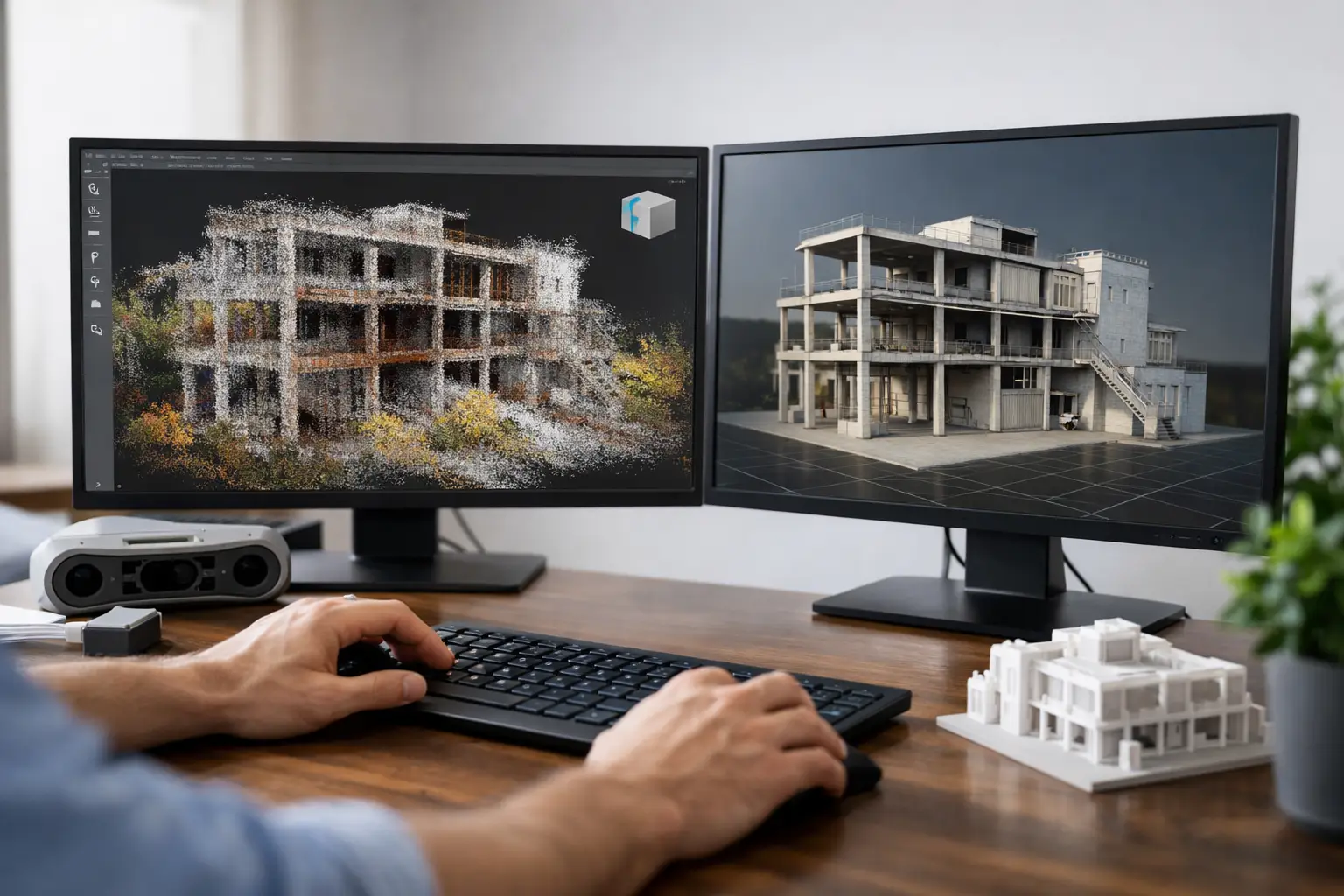
    In practical terms, 3D modelling from LiDAR data starts with a point cloud. A terrestrial scanner, mobile mapping system or drone-mounted LiDAR sensor captures millions of measured points across a site, structure or asset. Those points represent real geometry in three-dimensional space and can then be registered, cleaned, classified and converted into usable deliverables.

    That deliverable may be a mesh for visual context, a CAD model for design work, a BIM-ready representation of a building, a terrain model for planning, or a measured asset model for maintenance and inspection. The right format depends on the project brief. A highways team assessing corridor geometry will need something different from a heritage consultant recording a listed structure or a contractor checking as-built steelwork.

    This is where projects often succeed or fail. If the capture method, control strategy and modelling standard are not aligned from the outset, even a high-density point cloud can produce a poor commercial outcome. More data does not automatically mean a better model.

    Why 3D modelling from LiDAR data is now a mainstream workflow

    The adoption curve has shifted because project teams are under pressure to reduce time on site, improve safety and cut rework. LiDAR supports all three. It captures complex environments quickly, reduces the need for repeated site visits, and gives office teams a dense spatial record to interrogate after the fieldwork is complete.

    For construction and civil engineering, that means faster existing-condition surveys, better clash awareness and more reliable quantities. For utilities and infrastructure owners, it supports asset documentation without prolonged access restrictions. For forestry, land and environmental work, it improves terrain and canopy understanding across larger areas than manual methods can cover efficiently.

    There is also a commercial point here. A well-executed LiDAR workflow can shorten programme time and reduce downstream design uncertainty. However, there is always a balance between speed, accuracy and deliverable complexity. A drone survey may cover a large site faster than terrestrial scanning, but it may not provide the same detail in occluded areas or beneath canopy. A handheld or mobile system may be excellent for internal capture speed, but fixed scanning and tighter control can still be the better choice where tolerance is critical.

    Choosing the right capture method

    Not every job requires the same sensor platform. The model specification should drive the capture approach, not the other way round.

    Terrestrial LiDAR for high-detail measured environments

    Static terrestrial scanning remains one of the strongest options where detail, control and repeatability matter most. It is well suited to buildings, façades, industrial plant, structural surveys and heritage recording. The main advantage is precision in complex spaces, especially where line-of-sight planning is possible and site access can be managed properly.

    The trade-off is field time. Static setups take longer than mobile methods, and registration quality depends on disciplined survey control and good scan planning.

    Mobile and SLAM-based LiDAR for speed indoors and on complex routes

    Mobile mapping and SLAM-based systems are useful where speed is the priority, particularly across warehouses, commercial interiors, tunnels, corridors and operational facilities. They can reduce capture time significantly and allow teams to move through the site with less disruption.

    That said, the workflow depends heavily on the quality of the trajectory solution and the environment itself. Repetitive spaces, weak loop closure and limited control can affect consistency. These systems are highly effective when used in the right context, but they are not a universal replacement for survey-grade static methods.

    Drone LiDAR for terrain, roofs and inaccessible assets

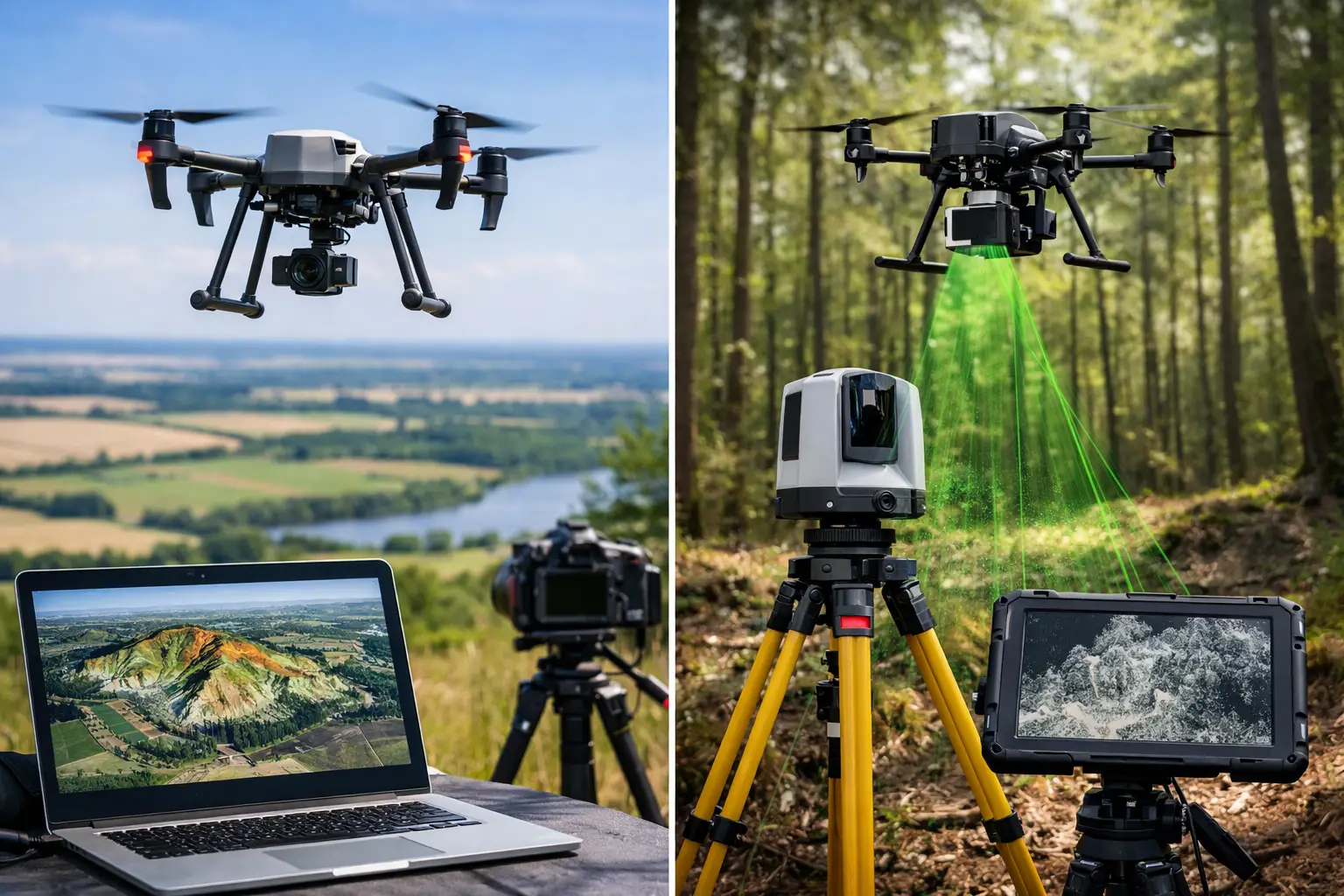
    Drone-mounted LiDAR is particularly effective for topographic modelling, stockpiles, corridors, embankments, utilities routes, roofs and other areas where ground access is inefficient or unsafe. It also offers clear benefits where vegetation penetration is needed for terrain extraction.

    The limits are equally clear. Airborne data is excellent for area coverage, but not always the best choice for detailed building interiors, fine façade features or small MEP elements. In many projects, the strongest result comes from combining drone LiDAR with terrestrial scanning or photogrammetry rather than relying on a single source.

    From point cloud to usable model

    Capturing the data is only one part of the job. The real discipline in 3D modelling lies in processing and interpretation.

    Registration and geo-referencing come first. If the point cloud is not correctly aligned to control, every downstream deliverable is compromised. Cleaning follows, removing noise, irrelevant objects and moving artefacts where necessary. Classification may then separate ground, vegetation, buildings and assets, depending on the required output.

    After that, the workflow diverges according to the brief. Terrain modelling may involve breaklines, surface generation and feature extraction. Building modelling may require walls, floors, roofs, openings and structural elements to be interpreted from the point cloud into CAD or BIM geometry. Asset workflows may focus on pipe runs, cable trays, equipment locations or clearance envelopes.

    This stage is where assumptions need to be managed carefully. LiDAR captures what it can see. It does not infer hidden services inside walls or behind cladding. If the model needs non-visible features, existing records or additional intrusive survey work may still be required. Good modelling practice is about transparency as much as accuracy.

    What affects quality and accuracy

    There is no single figure that defines whether a LiDAR model is good enough. Accuracy depends on sensor capability, control quality, scan density, environmental conditions, operator method and the tolerance required by the end use.

    A planning model for visual context can accept a different level of detail from a fabrication check or deformation analysis. Likewise, a broad earthworks surface does not require the same point density as a mechanical plant model. This is why the most reliable projects begin with a clear specification covering coordinate system, expected tolerances, level of detail, deliverable format and intended use.

    Environmental conditions matter as well. Reflective surfaces, rain, dense vegetation, poor GNSS availability and heavy traffic can all affect capture quality. None of these issues make LiDAR unsuitable, but they do affect how the survey should be designed and what supporting methods may be needed.

    Where the commercial value is strongest

    The strongest return on 3D modelling from LiDAR data usually appears where site complexity, access constraints or rework risk are high. Industrial facilities are a good example. A precise existing-condition model can support retrofit design, shutdown planning and prefabrication with fewer surprises on site.

    In construction, it can help teams validate as-built conditions before new works begin. In infrastructure, it supports inspection and asset records without relying on incomplete legacy drawings. In land and environmental applications, it can produce terrain and surface information at a scale that manual survey alone would struggle to achieve efficiently.

    There is also a procurement benefit in choosing a supplier that understands both the hardware and the downstream workflow. Organisations do not only need a scanner or a drone. They need a dependable route from capture through to a model that their design, engineering or asset teams can actually use. That is where a specialist provider such as LiDAR Tech UK can add value, combining equipment knowledge with practical delivery and support.

    When LiDAR is not the whole answer

    A realistic approach matters. LiDAR is highly effective, but it is not always the complete survey solution on its own. Projects may still need total station control, GNSS positioning, photogrammetry, conventional measured survey or manual verification of critical features.

    That is not a weakness. It is how professional workflows should operate. The aim is not to force every site into one method. The aim is to select the right combination of technologies for the required output, budget and programme.

    For buyers evaluating 3D modelling capability, the best question to ask is simple: what decision will this model support? Once that is clear, the right capture method, processing standard and deliverable become much easier to define. The most useful model is the one that reduces uncertainty, supports action and stands up to scrutiny when the project moves from survey into design and delivery.

  • Choosing a Scan to BIM Survey Company

    Choosing a Scan to BIM Survey Company

    A model that looks polished in a coordination meeting is only useful if the underlying survey is right. That is why choosing a scan to BIM survey company is less about buying a 3D model and more about securing dependable geometry, clear scope control and data you can use across design, construction and asset management.

    For contractors, consultants, estates teams and infrastructure owners, the problem is rarely whether laser scanning works. It does. The real question is whether the supplier can capture the right level of detail, control accuracy on site and deliver a BIM output that matches your software environment, information requirements and programme. That is where one provider can be very different from another.

    What a scan to BIM survey company should actually deliver

    At its core, scan to BIM is the process of capturing existing conditions using laser scanning, photogrammetry or a combined workflow, then converting that measured information into a structured digital model. In practice, the deliverable can vary significantly. One client may need an architectural Revit model for refurbishment design, while another needs a plant room model with service routes, clash-critical elements and asset data attached.

    A capable scan to BIM survey company should start by defining the end use before a scanner is switched on. If the model is for planning and spatial coordination, the required granularity may be modest. If it is for prefabrication, retrofit or MEP redesign, tolerances and modelling rules become far stricter. When the purpose is unclear, projects often end up paying for detail that is never used, or worse, receiving a model too light to support design decisions.

    This is why scope matters just as much as hardware. The best providers do not simply offer point cloud capture and modelling as separate boxes to tick. They align site control, survey method, registration, QA and object modelling to the decisions your team needs to make later.

    How to assess technical capability

    Not every survey company has the same field methodology, and not every BIM bureau understands survey risk. A strong provider needs both. Accurate scan to BIM work depends on control, coverage and validation, not just on owning modern equipment.

    Survey control and accuracy

    Ask how the company establishes control and verifies it. On a straightforward building survey, that may involve traverses, GNSS where appropriate and coordinated targets tied into an agreed datum. On constrained sites, internal control strategies matter more than headline scanner specifications.

    Accuracy claims should also be specific. There is a difference between instrument accuracy, registration accuracy and final model accuracy. If a supplier cannot explain that distinction clearly, it becomes harder to trust the end result. For design teams, that matters because errors compound quickly once the model is referenced by structural, architectural and MEP disciplines.

    Coverage and line of sight

    Scan quality is shaped by what the instrument can actually see. Dense plant, reflective surfaces, confined risers and occupied environments all create gaps. A good provider plans around occlusions with station placement, supplementary capture and realistic assumptions about access.

    This is one reason site experience matters. A scan to BIM survey company working regularly in live commercial buildings or infrastructure environments will usually be better at balancing productivity with completeness. Fast capture is valuable, but not if a return visit is needed because key interfaces were missed.

    Modelling standards and software fit

    You should also ask what software environment the provider works in and how the model will be structured. Revit is common, but the issue is not just file format. It is whether families, object naming, levels, grids and categorisation align with your standards.

    For some projects, a geometry-rich model is enough. For others, COBie fields, asset tags or classification systems need to be built in from the start. If these requirements are added late, rework follows. The right supplier will test those requirements before mobilisation, not after delivery.

    What to clarify before appointing a scan to BIM survey company

    Procurement problems usually start with vague briefs. If you want reliable pricing and usable deliverables, define what success looks like in operational terms.

    Begin with the survey extents. Is the requirement full building, selected floors, roofscape, façade, structural frame, MEP services or external setting out tie-in? Then define intended use. Refurbishment design, clash detection, record modelling and asset management all require different decisions on detail.

    Level of information is another area where misunderstandings are common. Some clients ask for “BIM Level 2” when what they really need is a model to a project-specific level of graphical and non-graphical information. A competent provider will translate broad BIM language into measurable scope. That includes tolerances, exclusions and assumptions.

    Programme is equally important. Rapid mobilisation is possible on many projects, especially where mobile scanning or drone capture can support access, but accelerated delivery only works when approvals, site permissions and output standards are already agreed. If deadlines are tight, ask how the company handles phased delivery so design teams can begin work before the full model package is complete.

    Where technology makes the difference

    The market is full of broad claims about faster capture and better digital workflows. Some are justified, some are sales language. What matters is whether the provider chooses the right capture method for the site.

    Static terrestrial laser scanning remains the benchmark for high-detail building interiors, plant spaces and areas where controlled accuracy is critical. Mobile LiDAR can improve productivity across large or repetitive spaces, though it may not suit every tolerance requirement. Drone-based photogrammetry or aerial LiDAR is often valuable for roofs, façades, inaccessible elevations and external assets, especially where working at height would otherwise slow the job or introduce additional risk.

    A technically capable survey partner knows when to combine these methods. That blended approach can reduce site time, improve coverage and produce more complete context for the final BIM model. It can also cut cost, but only when applied with discipline. More sensors do not automatically mean a better outcome.

    For UK clients managing mixed estates, infrastructure corridors or complex industrial sites, it is often useful to work with a supplier that can handle both equipment deployment and outsourced project delivery. That means they understand the practical strengths and limitations of the technology rather than treating it as a black box. LiDAR Tech UK sits in that category, combining hardware expertise with field services and data deliverables.

    Commercial questions worth asking

    Price still matters, but cheapest is rarely cheapest once omissions, return visits or remodelling are factored in. When comparing quotations, look closely at what has and has not been included.

    Point cloud registration, survey control, model authoring, QA checks, clash-ready geometry, file export formats and revision rounds should all be clear. If a fee looks unexpectedly low, it may exclude items that your team assumed were standard.

    Insurance, health and safety competence and experience in live environments should also be part of the assessment. For occupied buildings, hospitals, rail-adjacent sites, utilities assets and public-sector estates, logistics and compliance can shape project performance as much as technical ability.

    It is also reasonable to ask who will do the work. Some firms outsource modelling entirely after capture. That is not always a problem, but it can create disconnects between field reality and model interpretation. A tighter survey-to-model workflow usually leads to fewer assumptions and cleaner issue resolution.

    When scan to BIM is the right choice – and when it is not

    Scan to BIM is highly effective where existing conditions are complex, documentation is outdated or site access is limited. Refurbishment, retrofit, heritage work, plant replacement and façade projects are all strong use cases because precise geometry reduces design uncertainty.

    It is less compelling where the required output is simply a measured 2D plan with minimal future coordination needs. In those cases, a full model may add cost without adding much value. The right provider should say that plainly. Good advice is not always the most expensive option.

    There are also cases where a point cloud plus selective modelling is the smarter commercial choice. If only structure and major services affect the next design stage, modelling every minor object may be unnecessary. This is where experienced suppliers stand out – they match the deliverable to the decision, not to a generic workflow.

    A dependable scan to BIM survey company should leave you with more than a model. It should give your team confidence that what is on screen reflects what is on site, and that confidence is what keeps design moving, variation risk down and project decisions grounded in measured fact.

  • Point Cloud Processing Services Explained

    Point Cloud Processing Services Explained

    Raw scan data rarely causes the problem. The issue usually starts a few steps later, when millions or billions of points need to become something a design team, asset manager or contractor can actually use. That is where point cloud processing services matter. They turn field capture into dependable outputs – registered datasets, classified point clouds, 3D models, CAD drawings and analysis-ready deliverables that support real project decisions.

    For many organisations, the pressure is not simply to capture more data. It is to reduce rework, shorten programme times and avoid errors caused by poor registration, inconsistent georeferencing or unusable file formats. Processing is the stage that determines whether a survey dataset becomes an operational asset or a costly archive.

    What point cloud processing services actually cover

    Point cloud processing services can range from basic scan registration to fully managed data production. The right scope depends on how the data was captured, what level of accuracy is required and what the final output needs to support.

    At a practical level, processing often begins with data import, quality checks and registration. Individual scans or mobile mapping trajectories are aligned into a unified coordinate framework. If the project requires control integration, GNSS, RTK or total station references may be applied to place the dataset correctly within a survey grid or site coordinate system.

    From there, the work usually moves into cleaning and refinement. Noise removal, artefact reduction and decimation may be needed, particularly on busy construction sites or in areas with vegetation, reflective surfaces or moving traffic. Classification can then separate ground, buildings, vegetation, structural elements or utilities depending on the application.

    The final stage is output creation. That might mean a registered point cloud in a common exchange format, a measured BIM-ready model, 2D plans, elevation drawings, volume calculations or inspection deliverables. The processing stage is therefore not an isolated back-office task. It directly controls usability downstream.

    Why processing quality matters more than many teams expect

    A visually impressive point cloud is not necessarily a useful one. Datasets can look complete at first glance yet still contain alignment drift, control errors, duplicated surfaces or density issues that affect measurements and modelling. These problems become expensive when they are discovered late, especially after design work or construction decisions have already started.

    This is why professional point cloud processing services are often a better fit than treating the task as a simple software exercise. Experienced processing teams understand the tolerances needed for different outputs. A façade inspection, a highway corridor survey and an internal MEP record all have different acceptance criteria. Processing must be matched to that end use.

    There is also a commercial point. If a site team captures data quickly but the office spends days correcting preventable issues, the efficiency gain from modern LiDAR is reduced. Good processing protects the value of the original capture.

    Point cloud processing services for different project types

    Construction and civil engineering

    On construction and infrastructure projects, processing usually needs to support layout verification, progress monitoring, as-built records and design coordination. Accuracy and coordinate integrity are critical because the outputs often feed directly into CAD, BIM or machine control workflows.

    In these cases, registration and control checks are usually the priority. If the point cloud does not align properly with the project grid, every downstream decision is at risk. Processing may also include clipping by work area, surface generation, section extraction and comparison against design models.

    Asset inspection and facilities

    For building owners, utilities and infrastructure managers, the value often lies in accessibility. Processed point cloud data can support condition assessment, dimensional checks and planning for maintenance works without repeated site visits. Here, clarity and structure matter as much as raw density.

    The dataset may need to be segmented by asset type or location so that engineering or maintenance teams can work with it efficiently. In some cases, full modelling is not necessary. In others, simplified asset models or measured drawings add more practical value than a large native point cloud alone.

    Land surveying and topographic mapping

    Survey-grade processing tends to focus on georeferencing, classification and extraction. Ground filtering, breakline support and terrain modelling are common requirements, particularly for topographic surveys, flood studies and route mapping.

    The challenge is that automated classification is useful, but not infallible. Vegetation, embankments, overhead structures and mixed surfaces can all affect results. A dependable service combines software automation with experienced review, especially where contours, earthworks or drainage design depend on the output.

    Heritage, forestry and complex environments

    Historic buildings, woodland, quarries and industrial plants all create processing complications. Occlusion, irregular geometry and variable surface reflectivity can increase the amount of manual intervention needed. This is where service quality becomes visible very quickly.

    A lower-cost processing route may be acceptable for visualisation. It is less suitable where conservation documentation, structural interpretation or inventory-grade measurement is required. The trade-off usually comes down to speed versus detail, and the right answer depends on the project brief rather than a one-size-fits-all workflow.

    What to look for in a processing partner

    The first question is not what software they use. It is whether they understand the final deliverable and the tolerance it must meet. A processing team should be clear about coordinate systems, control methodology, expected accuracy and required export formats before the work starts.

    It also helps to assess whether the provider understands field capture as well as office processing. Teams with practical experience of terrestrial LiDAR, mobile mapping, drone surveys and GNSS workflows are generally better at diagnosing issues in the source data. They know the difference between a processing problem and a capture problem.

    For many UK buyers, support and responsiveness are equally important. Survey and construction programmes move quickly. If a dataset needs urgent revision, additional clipping, a format conversion or model adjustment, the service provider must be able to respond without delay. That is often where a specialist geospatial partner adds more value than a generic data bureau.

    Common outputs from point cloud processing services

    The best output is the one that matches the next decision in your workflow. Some clients need a fully registered point cloud with no further interpretation. Others need extracted intelligence rather than raw data.

    Typical deliverables include indexed point cloud files for use in standard viewing and modelling platforms, classified survey datasets, digital terrain models, orthographic imagery, measured elevations, floor plans, sections, clash-check support and 3D mesh or BIM-ready geometry. The right service should define these outputs at the outset rather than leaving them open to interpretation.

    That clarity also helps with file management. Point cloud datasets can become very large, and not every end user needs full-resolution data. In some cases, splitting by area, level, asset class or project phase makes the deliverable far easier to use across design, engineering and commercial teams.

    In-house processing or outsourced service?

    There is no universal answer. Organisations with frequent capture programmes, trained staff and established software stacks may benefit from handling more processing internally. That gives direct control and may reduce long-term cost per project.

    Even then, outsourcing can still make sense for peak workloads, specialist modelling or technically difficult datasets. Not every team wants to dedicate senior survey staff to intensive office processing when those people are needed on site.

    For businesses that capture data occasionally, or that need reliable outputs without investing heavily in software licences and specialist training, outsourced point cloud processing services are often the more efficient option. The key is to compare the full cost, including staff time, QA, revision cycles and project risk, rather than software costs alone.

    Getting better results from the start

    Processing quality begins in the field. Good control, sensible scan planning, adequate overlap and consistent metadata reduce office time and improve final accuracy. The best service providers will say this plainly, even when they are handling the office work themselves.

    That joined-up approach is where a specialist supplier can make a measurable difference. A business that understands hardware selection, survey methods, correction services, software and final outputs is in a stronger position to support the full workflow. For clients working across surveying, construction, asset management and inspection, that reduces fragmentation and improves accountability.

    LiDAR Tech UK operates in exactly that space, supporting organisations that need not only the right capture equipment but also dependable data processing and deliverables that fit operational use.

    When you are assessing point cloud processing services, the right question is not whether the provider can process the data. Most can. The better question is whether they can turn your dataset into a usable project asset, with the accuracy, structure and output format your team actually needs. That is where the value sits, and where good processing earns its place.

  • Photogrammetry for Construction Sites Explained

    Photogrammetry for Construction Sites Explained

    A site manager checking cut and fill against programme, a surveyor validating stockpile volumes, and a commercial team reviewing progress claims all need the same thing – current, reliable site data. That is where photogrammetry for construction sites has become commercially valuable. Done properly, it turns regular image capture into measurable 2D and 3D outputs that support planning, reporting and decision-making without slowing site operations.

    For contractors and developers, the appeal is straightforward. You can document large areas quickly, revisit conditions after the fact, and produce visual records that are easier for wider project teams to understand than raw field notes alone. The real benefit, however, is not simply having aerial imagery. It is having imagery processed into georeferenced outputs that can be checked against design, compared over time and used as part of a wider surveying workflow.

    Where photogrammetry for construction sites fits best

    Photogrammetry is particularly effective where you need broad site coverage, repeatable capture and visual context. Earthworks schemes, housing developments, highways projects, utilities corridors and quarry environments are all strong candidates. On these sites, regular drone or ground-based image capture can produce orthomosaics, surface models, point clouds and volume calculations that support both operational and commercial decisions.

    It is often used for topographic overviews, progress monitoring and stakeholder reporting because it gives teams a clear visual model of what is happening on the ground. It also helps when access is limited. Areas near unstable ground, active plant movements or incomplete formations can be documented without sending personnel into unnecessary risk.

    That said, photogrammetry is not a replacement for every survey method. If a project requires millimetre-level precision on structural features, façade tolerances or steelwork checks, you may need terrestrial laser scanning, total station observations or a combined workflow. The right question is not whether photogrammetry is better than traditional survey. It is whether it is the right tool for the specific output, accuracy requirement and site condition.

    What data outputs matter on a live project

    Construction teams rarely need imagery for its own sake. They need usable outputs that fit existing design, engineering and reporting workflows. In practice, that usually means georeferenced orthophotos for planning and communication, digital surface models for terrain review, point clouds for 3D interpretation, and volumetric analysis for materials management.

    Orthomosaics are useful because they provide a current, measurable site image that can be shared across delivery teams. A planner can review access routes, a site engineer can inspect temporary works layouts, and a commercial manager can reference progress without relying on outdated marked-up drawings. Surface models and contours become more valuable when grading, haul roads, drainage corridors or spoil placement need to be reviewed against intent.

    Volume calculations are one of the most common commercial uses. Stockpile measurement, cut-and-fill monitoring and imported material tracking can all be handled efficiently through repeated capture. The key is consistency in methodology. If capture height, overlap, control and processing standards vary from one survey to the next, comparisons become less reliable.

    Accuracy depends on more than the drone

    There is a common assumption that a better aircraft automatically guarantees better results. In reality, accuracy in photogrammetry depends on the full workflow: camera quality, flight planning, overlap, control, RTK or PPK correction, ground conditions, lighting, processing settings and operator competence.

    Ground control points still matter in many scenarios, particularly where tighter absolute accuracy is required or where site conditions are challenging. RTK-enabled drones can reduce field setup and improve efficiency, but they do not remove the need for verification. On construction projects, confidence in the output is just as important as the output itself. That means checking deliverables against known coordinates, reviewing error reports and understanding where tolerances are acceptable and where they are not.

    Surface texture also affects results. Fresh asphalt, standing water, repetitive materials and featureless surfaces can all reduce model quality. Similarly, tall structures, deep excavations and cluttered compounds may create occlusions that are better handled with supplementary ground capture or LiDAR. This is why specification should be led by site conditions and project objectives, not by a one-size-fits-all survey plan.

    Why contractors use it for progress and reporting

    Construction reporting often suffers from a gap between field activity and office visibility. Photogrammetry helps close that gap because it creates a dated visual and measurable record of the site at a given point in time. For project managers, that supports clearer progress reviews. For directors and clients, it provides a more objective basis for understanding status across large or complex developments.

    There is also a practical benefit in dispute avoidance. When site conditions, material quantities or sequence of works are later questioned, having an organised archive of georeferenced captures can be extremely useful. It will not solve every contractual issue, but it can reduce ambiguity around what was present, where it was located and how the site changed over time.

    This is especially valuable on multi-phase schemes where several contractors, consultants and client-side stakeholders need access to a common picture. A current orthomosaic or 3D model supports coordination in a way that isolated site photos rarely can.

    When photogrammetry is enough, and when LiDAR is better

    For many construction environments, photogrammetry offers excellent value because it captures rich visual detail over large areas at relatively low operational cost. If the site has good texture, clear visibility and standard earthworks or progress-monitoring requirements, it is often the most efficient option.

    LiDAR becomes more attractive when vegetation, poor lighting, complex vertical geometry or sparse surface texture starts to compromise image-based reconstruction. It can also be the better choice where point density on difficult surfaces is critical or where a project needs stronger performance in mixed environments. On some sites, the best answer is a combined approach – photogrammetry for visual context and broad modelling, with LiDAR or terrestrial scanning used for higher-confidence geometry in critical zones.

    That combined model is increasingly common because clients do not want fragmented data capture. They want a workflow that produces dependable deliverables with minimal repeat visits. This is where an experienced geospatial supplier or service partner adds value. The technology matters, but survey design, processing discipline and support capability matter just as much.

    Operational considerations before deployment

    Before adopting photogrammetry for construction sites, it is worth looking beyond the aircraft and software licence. The practical questions are about throughput, staff competence, compliance and output requirements. Who is going to capture the data? How often will surveys be flown? What level of control is needed? How quickly do teams need processed deliverables back?

    There is also the matter of airspace, site safety and operating procedures. Urban and infrastructure projects can bring restrictions that need careful planning. Live construction environments require clear coordination with site management, exclusion zones where appropriate and sensible scheduling around plant activity and deliveries.

    Processing capacity should not be overlooked. A contractor may be able to capture imagery quickly, but if the office team cannot process and quality-check datasets promptly, the commercial value drops. Fast data capture only helps when it leads to timely decisions.

    For some organisations, building an in-house workflow makes sense, particularly if surveys are frequent and standardised across multiple projects. For others, outsourced delivery or a hybrid model is more efficient. LiDAR Tech UK typically sees the best results where clients match the operating model to project volume, internal expertise and reporting deadlines rather than buying purely on headline specification.

    Choosing a commercially sound workflow

    The strongest photogrammetry workflows on construction sites are not necessarily the most complex. They are the ones designed around measurable outcomes. If your team needs monthly earthworks volumes, weekly progress orthomosaics and occasional design comparison, specify exactly that. If your client needs CAD-ready surfaces tied to site control, build the workflow around those deliverables from the start.

    This avoids a common problem: collecting impressive-looking data that does not answer the project’s actual questions. Professional buyers should be assessing photogrammetry on accuracy, repeatability, output compatibility, turnaround time and support, not on imagery alone.

    Used correctly, photogrammetry gives construction teams a faster way to understand the site they are building. The real advantage is not that it produces attractive models. It is that it helps teams measure change, reduce uncertainty and make better decisions while the job is still live.

  • Drone Thermal Inspection Services Explained

    Drone Thermal Inspection Services Explained

    When a roof leak, overheated electrical connection or insulation gap sits out of reach, delay usually costs more than the defect itself. Drone thermal inspection services give asset owners and contractors a faster way to identify heat-related issues across buildings, infrastructure and energy assets without relying on slow access methods or broad assumptions.

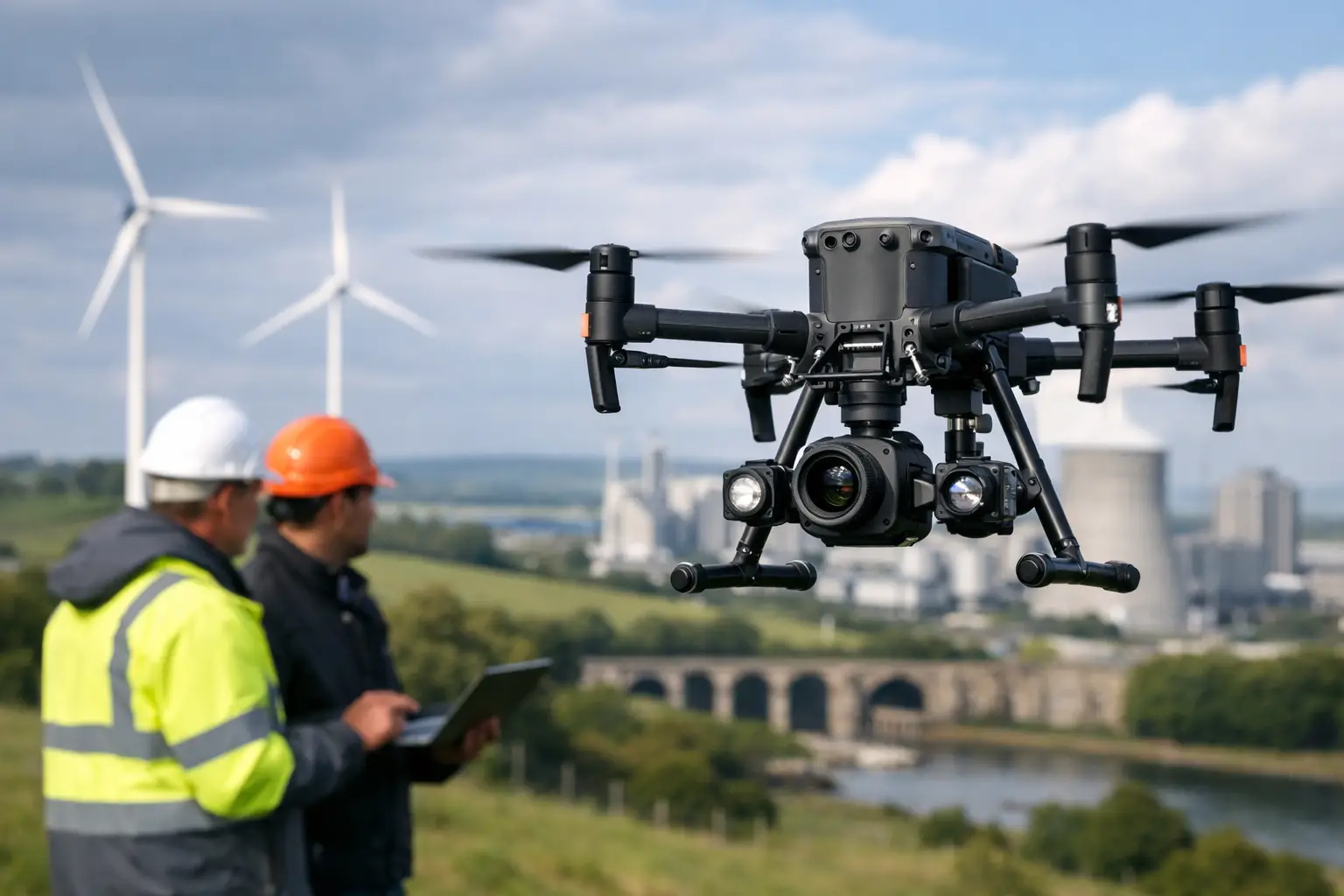
    For UK organisations managing dispersed sites, ageing infrastructure or safety-critical equipment, the value is practical. Thermal data collected from an enterprise drone can reveal temperature anomalies that are not visible in standard RGB imagery. That matters when the task is not simply to look at an asset, but to understand where heat loss, moisture ingress, electrical faults or mechanical stress may already be developing.

    What drone thermal inspection services actually deliver

    At a basic level, a thermal inspection drone captures infrared imagery that shows relative temperature differences across a surface or component. In a professional service, that raw capture is only one part of the job. The useful output is the interpretation, geo-referencing, reporting and follow-up evidence that allows maintenance teams, engineers and surveyors to act with confidence.

    A competent thermal inspection service should therefore provide more than flights and images. It should include mission planning, safe site operations, calibrated sensor use where required, environmental checks, and deliverables that make sense for the asset type. Depending on the project, that may mean annotated thermal imagery, orthomosaics, defect maps, CAD-compatible datasets, inspection reports or side-by-side RGB and thermal comparisons.

    The difference between a consumer-style aerial image set and a commercial inspection service is significant. Professional buyers need repeatability, traceable workflows and outputs that support decisions around repair, compliance, maintenance planning or further investigation.

    Where drone thermal inspection services are most effective

    Drone thermal inspection services are particularly effective where access is difficult, working at height introduces unnecessary risk, or large surface areas make manual checks inefficient. Roof inspections are a common example. Flat roofs on commercial and public-sector buildings can be surveyed quickly to identify trapped moisture, insulation defects and heat loss patterns, often with less disruption than scaffold-based investigations.

    In solar, thermal imaging is used to identify underperforming panels, hot spots and string-level anomalies across utility-scale or commercial arrays. On industrial sites, thermal inspection can support the assessment of process equipment, pipework, tanks and mechanical assets where elevated temperatures may indicate developing faults.

    Utilities and infrastructure teams also benefit. Substations, overhead assets, bridges and transport structures often require inspection in places where access windows are short and safety constraints are high. A drone-based approach can reduce time on site while improving visibility of wide or elevated asset areas.

    There is, however, an important caveat. Thermal imaging does not diagnose every defect on its own. It highlights temperature differences. The cause still needs to be understood in context, which is why experienced operators and correctly structured reporting matter.

    Why thermal inspections are not just standard drone surveys with a different camera

    Infrared sensors do not behave like ordinary visual cameras. Readings can be affected by emissivity, reflective surfaces, weather conditions, viewing angle, time of day and the thermal behaviour of the material itself. A metal roof, for example, can produce misleading results if the survey is carried out under poor conditions or interpreted without understanding how that surface responds to sunlight and ambient temperature.

    That is why project planning is critical. The best time to inspect a building for heat loss may not be the best time to inspect a solar array for performance anomalies. Wind, recent rainfall, cloud cover and solar loading can all influence results. In some cases, the right answer is to postpone the flight rather than collect compromised data.

    For professional clients, this is one of the strongest reasons to use a specialist provider rather than treating thermal capture as an add-on. The hardware matters, but the survey design and interpretation matter just as much.

    What to expect from a professional workflow

    A reliable provider will usually start by defining the asset, inspection objective and required output. That sounds straightforward, but it shapes everything from flight altitude to sensor settings and report format. If the objective is to locate roof moisture, the workflow will differ from an inspection aimed at electrical fault detection or district heat network assessment.

    Pre-site planning should cover airspace restrictions, permissions, access, risk assessment and environmental suitability. On site, the operation needs to be carried out by qualified personnel using enterprise-grade equipment with enough stability, image quality and thermal capability for the task.

    After capture, data processing is where the inspection becomes commercially useful. Thermal images may be aligned with visible imagery, stitched into mapped outputs or analysed frame by frame, depending on the application. Clear reporting should distinguish between observed anomalies, likely causes and areas where further ground verification is recommended.

    This is also where an integrated geospatial provider adds value. If the same team can support drone operations, mapping, GNSS control, LiDAR capture and data processing, the result is usually a cleaner workflow and better-aligned deliverables for engineering or asset management teams.

    Choosing the right provider for drone thermal inspection services

    Not every drone operator is an inspection specialist, and not every thermal specialist understands geospatial-grade data requirements. For commercial and public-sector buyers, provider selection should focus on capability rather than headline price alone.

    Sensor quality is one part of the decision. So is operational experience in your sector. An inspection of a school roof, a solar farm and a live utility asset may all use thermal imaging, but the planning, risk controls and reporting requirements are very different. Buyers should look for evidence of enterprise drone experience, inspection methodology, understanding of environmental constraints and the ability to deliver actionable outputs rather than generic imagery.

    It is also worth asking how findings will be presented. Maintenance teams usually need concise defect identification and location referencing. Surveyors and engineers may require georeferenced datasets and higher integration with existing mapping or CAD workflows. A service is only efficient if the output fits the downstream task.

    LiDAR Tech UK operates in exactly this space, supporting organisations that need accurate aerial inspection data, dependable field operations and deliverables that work within wider surveying and asset management processes.

    Limits, trade-offs and when another method may be better

    Drone thermal inspection is efficient, but it is not universal. Internal defects may not present a measurable external thermal signature. Dense vegetation, poor line of sight or highly reflective materials can reduce result quality. Some assets also need close-contact testing or internal access to confirm the source of a problem.

    There are also regulatory and operational limits. Airspace constraints, urban environments, weather and site safety requirements can all affect whether a drone survey is practical on a given date or at all. In those cases, a mixed-method inspection strategy may be the better option.

    The key point is that thermal drone data works best as part of a structured inspection process. It can narrow down fault locations quickly, reduce unnecessary access costs and improve maintenance prioritisation, but it should not be treated as a substitute for every other form of engineering assessment.

    The commercial case for acting earlier

    Most organisations do not lose money because a defect exists. They lose money because it is found late, after performance has dropped, energy costs have risen or access and repair requirements have expanded. Drone thermal inspection services are valuable because they bring earlier visibility to assets that are otherwise checked too slowly or too infrequently.

    That is especially relevant for portfolios. Commercial property managers, utilities teams, local authorities and contractors responsible for multiple sites need inspection methods that scale. A drone-based thermal survey can cover more ground in less time, while improving safety and giving decision-makers visual evidence they can share internally.

    For buyers comparing service options, the question is not simply whether a drone can collect thermal imagery. The real question is whether the provider can turn that imagery into reliable, site-ready information that supports maintenance, budgeting and risk reduction.

    If the cost of access is high, the asset is difficult to inspect, or heat-related faults carry operational consequences, thermal surveying by drone is often the sensible place to start. The strongest results come when the survey is planned around the asset, the environment and the decision that needs to be made next.

  • Volumetric Stockpile Survey Services Explained

    Volumetric Stockpile Survey Services Explained

    When stock figures on paper do not match what is on the ground, the cost shows up quickly – in procurement errors, billing disputes, production planning gaps, and avoidable site risk. Volumetric stockpile survey services give operators a reliable way to measure material volumes with far greater speed and consistency than manual methods, especially across large, active, or difficult-to-access sites.

    For quarries, recycling facilities, construction compounds, ports, and bulk material handlers, stockpile measurement is not just an occasional reporting task. It affects commercial control, operational planning, and compliance. The question is less whether to measure, and more how to do it accurately, safely, and often enough to support decisions that matter.

    What volumetric stockpile survey services actually provide

    At a practical level, volumetric stockpile survey services capture the shape of a stockpile or a group of stockpiles, process that survey data into a surface model, and calculate material volumes against a defined base. The end result is a measurable quantity that can be used for inventory reporting, contractor payment, progress tracking, or internal reconciliation.

    The service itself can vary depending on the site and the level of detail required. Some projects involve a straightforward monthly stock count across a quarry or depot. Others require high-frequency surveys for earthworks progress, staged excavation monitoring, or material movement analysis across multiple zones.

    What matters most is not just collecting data, but collecting the right data in the right way. A volume figure is only useful if the survey control, capture method, processing workflow, and base definition are all suitable for the site conditions and reporting purpose.

    Why traditional stockpile measurement often falls short

    Many sites still rely on methods that are workable in theory but inconsistent in practice. Manual GPS shots, tape-based checks, machine estimates, and visual approximation can all introduce unnecessary variation. On simple piles these methods may appear adequate, but once stockpiles become irregular, steep, numerous, or frequently changing, confidence in the figures drops.

    There is also the issue of access. Sending personnel onto unstable or recently worked material carries obvious safety concerns. Even where access is possible, collecting enough points to model a stockpile properly can take considerable time, particularly on busy industrial sites where plant movements and operational constraints limit survey windows.

    That is why modern survey workflows increasingly use drone photogrammetry, LiDAR scanning, and GNSS-supported control. These methods reduce time on the pile, improve coverage, and produce a denser dataset for more dependable volume calculations.

    How modern stockpile surveys are carried out

    Most current stockpile surveys begin with a review of the site, the material types, required outputs, and the level of accuracy needed. A quarry manager looking for monthly inventory totals may need a different level of detail from a contractor measuring cut and fill against a design surface.

    Ground control is usually established or verified first. This is a critical step because volume outputs are only as reliable as the positional framework behind them. Depending on the environment, this may involve GNSS, RTK correction workflows, or total station control.

    The data capture stage then follows. For broad site coverage, enterprise drones are often the most efficient option. They can survey multiple stockpiles quickly, minimise disruption to operations, and provide dense image data suitable for photogrammetric modelling. Where vegetation, complex geometry, poor texture, or difficult lighting are factors, LiDAR may be the better fit. On some sites, a combined approach delivers the best result.

    Once captured, the survey data is processed into a terrain or surface model. Stockpile boundaries are checked, voids or noise are corrected, and volumes are calculated against an agreed base surface. Deliverables can include volume tables, orthomosaic mapping, contour plans, point clouds, CAD-ready files, and repeat-survey comparisons.

    Volumetric stockpile survey services and accuracy

    Accuracy is the point most buyers focus on, and rightly so. However, there is no single accuracy figure that applies to every project. The right standard depends on the survey method, control quality, material surface, environmental conditions, and how the result will be used commercially.

    For example, loose aggregate with a clearly defined surface is generally more straightforward to model than dark, reflective, or heavily disturbed material. Similarly, a well-controlled drone survey on an open site may produce excellent results, but if the base of the stockpile is poorly defined, the final volume can still be open to question.

    This is where an experienced provider adds value. Good volumetric stockpile survey services are not simply about flying a drone or scanning a pile. They are about selecting a method that fits the job, applying proper survey control, and explaining tolerances honestly. In commercial terms, a fast answer is not enough if the method cannot stand up to scrutiny.

    Where these services deliver the strongest return

    The commercial case is usually strongest where material volumes change regularly, where stock levels affect working capital, or where disputes over measured quantities have direct financial consequences. Quarries and aggregate businesses are obvious examples, but they are not the only ones.

    Construction and civil engineering projects use stockpile surveys to track imported fill, excavated spoil, and progress against programme. Waste and recycling operators use them to support reporting, capacity planning, and material throughput analysis. Ports and logistics sites use them to monitor bulk commodities where volume visibility supports both operational planning and customer reporting.

    There is also a strong case in environments where health and safety considerations limit conventional access. Surveying from the air or from a safe standoff position can reduce exposure to unstable slopes, moving machinery, and active loading zones.

    Choosing the right survey method for the site

    No single capture method is best in every case. Drone photogrammetry is efficient, cost-effective, and well suited to large open sites with clear visibility. It is often the preferred option for routine stockpile reporting because it balances speed and detail well.

    LiDAR comes into its own where surface texture is inconsistent, where complex structures sit close to the stockpiles, or where a dense and direct 3D measurement is required. Terrestrial or mobile LiDAR can also be useful in confined areas, under cover, or where flight restrictions apply.

    GNSS-based ground survey still has a role, particularly for control establishment, validation, or small isolated tasks. It is not obsolete. It is simply less efficient as the primary measurement method when sites are large or stockpile geometry is complex.

    The right provider should be comfortable advising on that trade-off rather than forcing every project into one workflow. That is especially relevant for UK operators dealing with mixed sites, variable weather, and live operational constraints.

    What to look for in a service provider

    The quality of the deliverable matters just as much as the survey itself. Professional buyers should look for a provider that can explain methodology clearly, define expected outputs in advance, and work within the practical realities of an operational site.

    That includes understanding access rules, RAMS requirements, flight permissions where needed, control strategy, and output formats that fit downstream workflows. If the result has to support CAD teams, commercial managers, or site engineers, the data should arrive ready to use rather than requiring further interpretation.

    It is also worth asking how repeatability is handled. If surveys are being carried out monthly or quarterly, consistency in method is essential. Trend reporting only works when capture and processing are controlled properly from one survey to the next.

    For organisations that also procure hardware, software, and support, working with a geospatial specialist that understands both service delivery and the underlying technology can simplify implementation. LiDAR Tech UK supports that broader model by combining data capture capability with practical expertise in LiDAR, GNSS, RTK, and enterprise drone workflows.

    The value is in better decisions, not just better measurements

    Volume data becomes useful when it feeds action. That might mean ordering the right amount of aggregate, validating subcontractor claims, planning extraction phases, or reconciling inventory with finance records. The more regularly and reliably a site can measure stock, the fewer assumptions operators have to make.

    There is, of course, a balance to strike. Higher survey frequency brings better visibility, but only if the reporting cycle matches operational need. Some businesses need weekly updates. Others only need month-end figures with strong confidence levels. The best approach depends on how quickly stock moves, how material is billed, and how much uncertainty the business can tolerate.

    If your site depends on accurate material quantities, volumetric stockpile survey services are not a nice-to-have. They are a practical control measure that supports safer operations, cleaner reporting, and more confident commercial decisions.

  • Topographic Survey with Drone Explained

    Topographic Survey with Drone Explained

    When a site needs current levels, contours and ground detail quickly, a topographic survey with drone can reduce days of field time to a matter of hours. That matters on live construction sites, infrastructure corridors and large land parcels where access, safety and programme pressure all affect how efficiently data can be captured.

    The value is not simply speed. Drone survey workflows now give professional teams a practical way to collect dense spatial data across complex terrain, then turn it into CAD-ready surfaces, contours, orthomosaics and volumetric outputs. For many projects, that means faster decisions, fewer repeat visits and a clearer view of site conditions before design, excavation or asset works begin.

    What a topographic survey with drone actually delivers

    A topographic survey captures the shape of the ground and the visible features on it. In practice, that can include spot levels, breaklines, contours, kerbs, roads, embankments, stockpiles, drainage routes, buildings, fences and vegetation boundaries. When captured by drone, the survey is built from aerial imagery, LiDAR data or a combination of both, supported by GNSS control and post-processing.

    The output is rarely just a map. Professional clients usually need deliverables that fit directly into design and engineering workflows. That may include a digital terrain model, digital surface model, georeferenced orthophoto, point cloud, contour set, measured sections or linework suitable for CAD and GIS environments.

    The right output depends on the job. A housebuilder may need existing levels and earthworks quantities. A civil engineering contractor may need corridor mapping ahead of drainage design. A utilities team may need a clear ground model around access constraints and surface assets. The survey method should follow the commercial need, not the other way round.

    Where drone topographic surveys make the most sense

    Drone surveys are strongest where the site is large, uneven, difficult to access or time-sensitive. Quarries, solar farms, highways schemes, land development sites, rail-adjacent areas, floodplains and agricultural estates are all good examples. A drone can cover broad extents efficiently while keeping surveyors out of hazardous ground conditions and away from moving plant.

    There is also a clear advantage on sites where regular updates are required. Progress tracking, cut and fill monitoring and stockpile measurement all benefit from repeatable aerial capture. With a consistent flight plan and control strategy, datasets can be compared over time to show measurable change.

    That said, a drone is not automatically the best choice for every topographic brief. Small urban sites with heavy tree cover, narrow access and lots of hidden ground detail may still require a stronger terrestrial component. If the critical information sits beneath canopy or beside building overhangs, aerial photogrammetry alone may leave gaps.

    Accuracy depends on method, control and site conditions

    Accuracy is the first question serious buyers ask, and rightly so. A topographic survey with drone can achieve highly usable results for many engineering and construction applications, but headline accuracy claims only mean something when tied to a proper workflow.

    Photogrammetry-based surveys rely on image quality, overlap, camera calibration, ground control, RTK or PPK positioning, flight height and good visibility of the ground. LiDAR-equipped drones add a major advantage where vegetation, low texture or uneven light make photogrammetry less reliable. They can produce more consistent ground information in challenging environments, especially where some canopy penetration is needed.

    In UK practice, accuracy requirements should be defined at the start. There is a difference between data suitable for early feasibility, detailed design support and measured quantities for commercial reporting. Control points, check points and validation against known coordinates remain essential. Without that discipline, the dataset may look convincing while still falling short of specification.

    This is where experienced deployment matters. Hardware capability is only one part of the result. Flight planning, GNSS correction quality, site control layout, processing settings and quality assurance all influence whether the final model stands up to scrutiny.

    Photogrammetry or LiDAR for topographic work?

    This is often the key technical decision. Photogrammetry is efficient, cost-effective and capable of very strong results on open sites with good surface visibility. It works well for earthworks, development land, stockpile measurement and general mapping where the ground can be clearly seen from above.

    LiDAR becomes more attractive when the site includes vegetation, poor texture, shadow-heavy terrain or a need for cleaner bare-earth extraction. On infrastructure routes, wooded land, utility corridors and mixed rural terrain, LiDAR can provide a more dependable ground model. It also handles complex vertical geometry better in some environments, especially when paired with accurate GNSS and inertial data.

    The trade-off is commercial as much as technical. LiDAR payloads and processing workflows typically come at a higher cost than standard drone photogrammetry. For some projects, that cost is easily justified by the data quality and reduced need for supplementary fieldwork. For others, photogrammetry remains the better fit because the required accuracy and site visibility do not warrant a LiDAR workflow.

    The field process behind a dependable result

    A professional drone survey starts well before take-off. Airspace status, site permissions, weather window, vegetation condition and required outputs should all be confirmed in advance. If the deliverable needs to support design or legal boundary-related work, tolerances and exclusions should be clearly stated from the outset.

    On site, survey control is established or verified using GNSS or total station methods as appropriate. The drone mission is then planned around altitude, overlap, sensor type and site geometry. Obstructions, reflective surfaces, water bodies and active machinery all affect how the capture should be carried out.

    After flying, the data moves into processing and quality control. Images or LiDAR observations are aligned, georeferenced and checked against control. Surfaces are classified, artefacts removed and outputs generated in the formats the client actually needs. If a contractor needs a terrain model for machine control planning, that should be built accordingly. If an architect needs background mapping for concept design, the output specification will be different.

    Common limitations buyers should account for

    A drone survey is not exempt from operational constraints. Weather remains a major factor in the UK, especially wind, rain and poor light. Tree canopy, standing water, reflective roofing and deep shadows can all affect data quality. Restricted airspace or congested urban settings may limit where and when flights can be carried out.

    There is also the matter of obscured detail. Aerial data captures what the sensor can see. Features hidden under dense vegetation, beneath structures or inside enclosed compounds may still need terrestrial survey methods. On many projects, the best answer is not drone versus ground survey, but drone plus ground survey.

    Decision-makers should also ask about processing standards, coordinate systems and deliverable compatibility. Fast capture is only useful if the output lands in the right format and reference frame for the wider project team.

    What commercial teams should ask before appointing a provider

    If the survey will inform design, quantities or asset records, the supplier should be able to explain expected accuracy, control methodology, sensor choice and QA process in plain terms. Asking what drone is used is less useful than asking how the result is validated.

    It is also worth checking whether the provider can support more than data capture. Many projects benefit from a partner that can advise on sensor selection, process the data in-house, supply supporting GNSS or drone hardware where needed, and scale from one-off surveys to repeat site programmes. That combination reduces friction when survey requirements evolve mid-project.

    For organisations that want to build internal capability as well as outsource fieldwork, this joined-up model is especially useful. LiDAR Tech UK operates in that space, supporting clients with professional survey technology, training and project delivery across the same geospatial workflow.

    Why this method is now part of mainstream survey delivery

    The strongest case for drone topographic surveying is not novelty. It is operational fit. When used properly, it improves coverage, shortens mobilisation time and produces dense datasets that support engineering, planning and site management decisions at pace. It also improves safety by reducing time spent in difficult or hazardous terrain.

    Still, the right answer depends on the site, the tolerance and the intended use of the data. Open ground, large extents and repeat monitoring favour drone methods strongly. Heavily obstructed sites, dense canopy and detailed feature extraction may call for a blended approach with terrestrial instruments and, in some cases, LiDAR rather than imagery alone.

    For professional buyers, that is the key point. A topographic survey with drone is not a shortcut around survey standards. It is a high-performance capture method that delivers best value when the specification, sensor and processing workflow are matched properly to the job. Get that alignment right, and the result is more than a fast survey – it is better information at the point the project needs it most.

  • Enterprise Drone Surveying Solutions That Scale

    Enterprise Drone Surveying Solutions That Scale

    When a site programme slips because survey data arrives late, the problem is rarely just field time. It is usually a workflow issue – too many handoffs, inconsistent data quality, or equipment that cannot keep pace with project demands. Enterprise drone surveying solutions address that gap by combining aircraft, sensors, positioning, software and support into a system that can deliver repeatable results at scale.

    For professional buyers, the question is not whether drones can capture data quickly. That point is already well proven. The real decision is whether a drone-based workflow can meet the accuracy, reliability and output standards your organisation needs across multiple sites, teams and use cases. That is where enterprise-grade capability matters.

    What enterprise drone surveying solutions actually mean

    The term is often used loosely, but in practice enterprise drone surveying solutions are built for operational use rather than occasional flying. They are designed to support repeatable surveying, mapping and inspection tasks with controlled data capture, dependable positioning, compatible software and a support structure behind the hardware.

    That distinction matters. A lower-cost drone may produce acceptable imagery for basic visual records, but enterprise operations need more than a useful picture. They need measurable outputs such as georeferenced orthomosaics, point clouds, digital surface models, stockpile volumes, corridor surveys and inspection datasets that can be used in CAD, GIS and asset management workflows.

    The solution therefore sits across the full chain. Aircraft performance affects coverage and uptime. Payload choice determines whether you are collecting RGB, thermal or LiDAR data. RTK or PPK capability influences positional accuracy. Processing software governs how quickly raw data becomes usable deliverables. Training and technical support reduce operational risk. If one part is weak, the whole workflow suffers.

    Where enterprise drone surveying solutions deliver value

    Surveying teams usually adopt drone systems for one of three reasons: speed, access or consistency. On many construction and infrastructure sites, all three apply at once.

    For topographic mapping, drones can cover larger areas in less time than traditional ground-only methods, especially where line of sight is poor or terrain is difficult. For inspections, they reduce the need to place personnel near unstable structures, live assets or steep embankments. For progress monitoring, they make it practical to capture the same site repeatedly and compare outputs over time.

    Utilities, highways and rail operators often see the strongest value where assets are dispersed and difficult to inspect efficiently from the ground. Forestry and land management users benefit from broad area coverage and, where required, the added penetration and surface detail that LiDAR can provide in vegetated environments. Quarrying and earthworks teams tend to focus on measurement speed, stockpile calculations and regular volumetric reporting.

    The commercial benefit is not just faster flying. It is faster decisions. When data arrives in the right format, with the right level of confidence, project teams can update quantities, verify progress, detect issues earlier and reduce revisits.

    Choosing the right sensor for the job

    Not every survey requirement needs the same payload, and this is where many purchasing decisions go wrong. The aircraft is important, but the sensor usually defines the value of the outcome.

    RGB photogrammetry remains the most widely used option for general mapping and site documentation. It is cost-effective, proven and suitable for many topographic and progress-monitoring tasks, provided lighting, overlap and ground control are managed properly. For construction, aggregates and planning work, it is often the most practical starting point.

    LiDAR becomes more relevant when terrain is obscured by vegetation, when consistent elevation capture is critical, or when clients require dense 3D data with reduced dependence on image texture. It also suits asset and corridor applications where detailed surface geometry matters. The trade-off is cost. LiDAR payloads and processing workflows are typically more expensive, so the business case should be tied to clear operational need rather than perceived prestige.

    Thermal sensors serve a different purpose again. They are less about conventional surveying and more about condition assessment, heat loss, solar inspection and fault detection. For many organisations, thermal capability complements mapping work but does not replace it.

    Accuracy is a workflow issue, not a brochure claim

    Professional buyers know that published accuracy figures only tell part of the story. Enterprise drone surveying solutions can support high-accuracy outputs, but only when the complete workflow is controlled.

    RTK and PPK positioning improve confidence in image and LiDAR georeferencing, reducing the need for dense ground control in some scenarios. Even so, site conditions, survey design, flight planning, calibration, base data and processing settings all influence the final result. A strong drone platform cannot compensate for poor mission planning or weak quality assurance.

    This is why experienced operators still validate outputs against known control and apply appropriate checks before data is issued. If your work supports engineering design, quantity verification or regulatory reporting, accuracy should be discussed in terms of achievable project outcomes, not headline specifications alone.

    For some organisations, that means building an internal QA process. For others, it makes more sense to work with a provider that can supply the hardware, training and project support together. LiDAR Tech UK operates in that space, where equipment capability and field delivery need to align.

    Integration matters more than features alone

    One of the biggest differences between entry-level and enterprise-grade adoption is integration. A drone may have an impressive sensor and flight time, but if the data cannot move efficiently into your existing workflow, the operational value drops quickly.

    Survey and engineering teams need outputs that work with the software they already use. That may mean CAD-compatible surfaces, GIS-ready layers, classified point clouds, mesh models or inspection reports that feed into asset management systems. Commercially, the strongest solutions are the ones that reduce friction between capture and action.

    This also applies to fleet management and internal governance. Larger organisations often need standard operating procedures, pilot training records, consistent file structures, maintenance planning and support arrangements that keep systems available across multiple teams. In that environment, buying a drone is easy. Running a dependable surveying operation is harder.

    What to assess before you invest

    A sensible procurement process starts with application fit rather than brand preference. Ask what you need to measure, how often you need to capture it, what outputs your teams require, and what tolerances are acceptable. That quickly narrows the right sensor, aircraft class and software stack.

    You should also assess who will operate the system. If your team already has geospatial expertise, an in-house deployment may be straightforward with the right training and support. If not, a managed service or hybrid model may be more efficient, especially where deadlines are tight or data standards are demanding.

    Budget should be viewed over the full operating life, not just the initial purchase. Hardware cost is only one line item. Training, software licensing, batteries, maintenance, correction services, processing time and staff capacity all affect total cost of ownership. Cheaper platforms can become expensive if they create rework or unreliable outputs.

    Support is another practical differentiator. When a project depends on timely capture, responsive technical help matters. Authorised supply, implementation guidance and aftersales support are often more valuable than a marginal difference in headline specification.

    When to buy equipment and when to outsource

    There is no universal answer here. If you have regular survey demand, internal resource and a clear workflow for processing and using the data, ownership can deliver strong long-term value. It gives you scheduling control, repeat capture capability and the opportunity to standardise surveys across your portfolio.

    If your requirement is intermittent, highly specialised or tied to short-term project peaks, outsourcing may be the better commercial choice. The same applies where advanced LiDAR processing, complex corridor work or inspection reporting requires expertise that would take time to build internally.

    Many organisations now take a mixed approach. They use in-house drones for routine mapping and progress capture, then bring in specialist support for higher-accuracy surveys, LiDAR missions or periods of intense demand. That model often gives the best balance of control and flexibility.

    Enterprise drone surveying solutions in the UK market

    For UK organisations, operational fit also includes local realities. Weather windows can be narrow. Airspace restrictions vary significantly by region. Site access, public safety and project compliance all need careful management. Equipment and workflows should therefore be selected with UK operating conditions in mind, not just laboratory performance.

    That is one reason buyers increasingly look for suppliers that can do more than ship hardware. They want advice on payload selection, training, correction services, deployment planning and data outputs. They also want a partner that understands how surveying, mapping and inspection requirements differ between construction, utilities, land management and public-sector work.

    The strongest enterprise drone surveying solutions are not defined by a single aircraft model. They are defined by how reliably they produce usable data, how well they fit the job, and how effectively they can be supported over time.

    If you are assessing your next surveying workflow, start with the outcome rather than the platform. The right system is the one that gives your team dependable data, repeatable processes and the confidence to scale without compromising accuracy.